How Much Does a Portfolio Website Cost in 2026? Builder by Builder, Year One to Year Three
How much does a portfolio website cost? On a portfolio builder in 2026, a working site costs roughly $65 to $350 a year on annual billing, and up to $444 if you sell photographs at volume. The cheapest entry plan we priced was $64.80 for the first year; the dearest mainstream option for a selling photographer was $444. Prices below were read from each vendor between 9 and 10 October 2026, in US dollars before tax.
Three things move the real bill more than the headline price: whether the first year is a promotion, whether you pay for a domain from year two, and whether the platform takes a cut when you sell. If you only show work, the cheap end of that range is enough. If you deliver to clients or sell prints, budget from the middle.
What you actually pay for
A portfolio site has five costs, and only the first appears on a pricing page in large type. The plan is the subscription itself. The domain is your own address, often free for the first year and then billed at a renewal price. Storage decides whether your archive fits or whether you pay to move up a tier. Selling fees apply only if you sell, but on some platforms they are larger than the subscription. And your time is the cost of building, which a template reduces and a hand-built design increases.
Portfolio buyers usually underestimate the third and fourth. A designer with thirty case-study images will never notice a storage cap; a photographer delivering full-resolution client galleries can reach one quickly on a capped plan. Equally, a commission that looks small as a percentage becomes the biggest line on the bill once prints start selling, which the selling section below works through.
Builder by builder: year one and year three
The table prices the plan a typical portfolio would actually need on each platform, not the cheapest plan that technically exists. Year three is the renewal price with any first-year offer removed, since that is the number you will live with.
| Builder and plan | Year one | Year three | Client galleries | When you sell |
|---|---|---|---|---|
| Pixpa Basic | $64.80 | $86.40 | All plans | Zero commission |
| Pixpa Creator | $108 | $144 | All plans | Zero commission |
| Format Basic | $120 | $120 | 3 on Basic | Store on Pro tiers |
| Zenfolio Professional | $138 | $276 at its normal rate | Yes | 7% of each order |
| Adobe Portfolio via Lightroom (1TB), paid monthly | $143.88 | $143.88 | No | Cannot sell |
| Cargo | $168 | $168 | No | $66 a year add-on, no transaction fee |
| Webflow Basic | $180 | $180 | No | Separate ecommerce plans |
| SmugMug Portfolio | $282 | $282 | Yes | 15% of your markup |
| Squarespace Core | $348 | $348 | No | 0% store fee on Core |
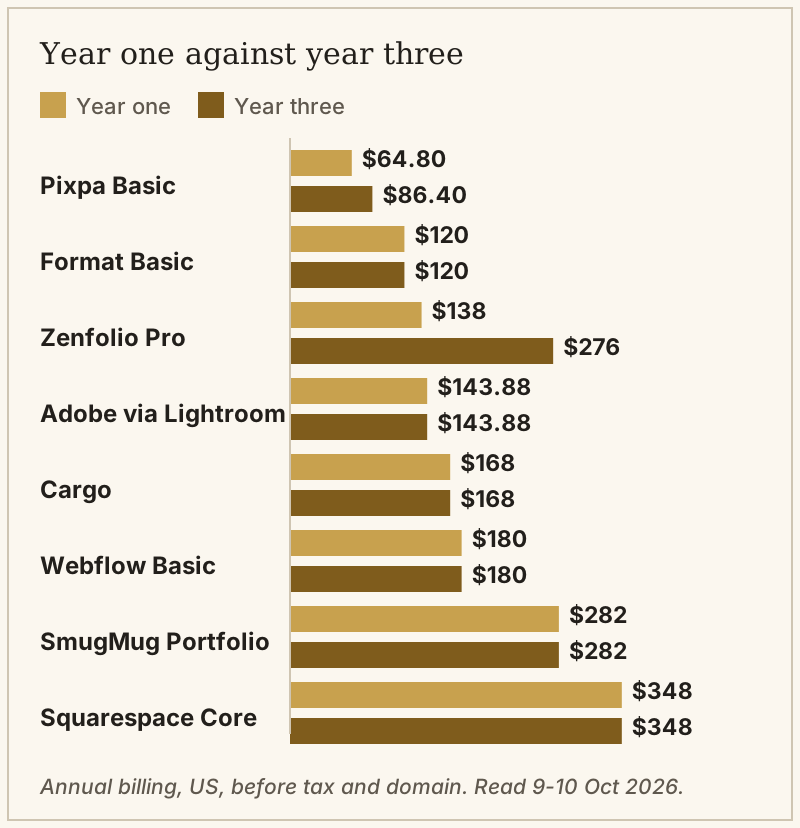
Read the chart for movement rather than height. Most bars do not change between year one and year three: Format Basic, Cargo, Webflow, SmugMug and Squarespace charge the same on renewal as on day one. Two do change. Pixpa's yearly plan renews at 20% off its monthly price, so Basic goes from $64.80 to $86.40. Zenfolio's offer, which its pricing page says ends on 15 October 2026, renews at what it prints as the normal rate, so Professional doubles from $138 to $276.
Promo price against the price you renew at
The promotions in this category have dates on them, and some have already passed by the time you read a review. Format's Pro tiers were $12 and $15 a month billed annually against struck-through prices of $17 and $26, with an offer code that must be redeemed by 31 October 2026 and a discount that applies to the first year only. Zenfolio's Professional and Advanced annual plans were half their normal price until 15 October, and Basic was $7 against a normal $9. Pixpa's yearly plans carry 40% off the first period and 20% off after it.
Some discounts are not promotions at all. Squarespace's Basic plan was $19 a month billed annually against $25 billed monthly, and SmugMug's Portfolio plan was $282 a year against $35.50 a month; those gaps are the price of committing for a year and they carry over to renewal. When you compare builders, compare renewal against renewal, and treat any figure with an end date as a one-year discount.
The domain, and the year it starts to cost
Several builders bundle a free domain with an annual plan for twelve months and bill for it after that. Squarespace includes one year of free registration on annual plans, then renews it at its standard rate, and advertises domains from $10. Format's free first-year domain starts on its Pro tiers. Cargo includes one custom domain connection in its price, which connects a name you already own rather than buying one. As one published example of a renewal price, Wix prices a .com at $7.90 in year one, with renewals at $21.35.
The practical advice is to register the domain in your own name, with any registrar you like, and point it at whichever builder you choose. It costs a little more effort on day one and saves a painful move if you ever change platforms, because the address that is printed on your business cards stays yours.
If you sell prints, the commission changes the maths
Selling turns a flat subscription into a variable cost, and the three fee models in this category behave very differently. Pixpa lists zero commission on sales on every plan. SmugMug keeps 15% of the markup you add over its lab price, and that 15% includes card processing. Zenfolio takes 7% of each order's sub-total on its Professional and Advanced plans, with the card processor's fee on top.
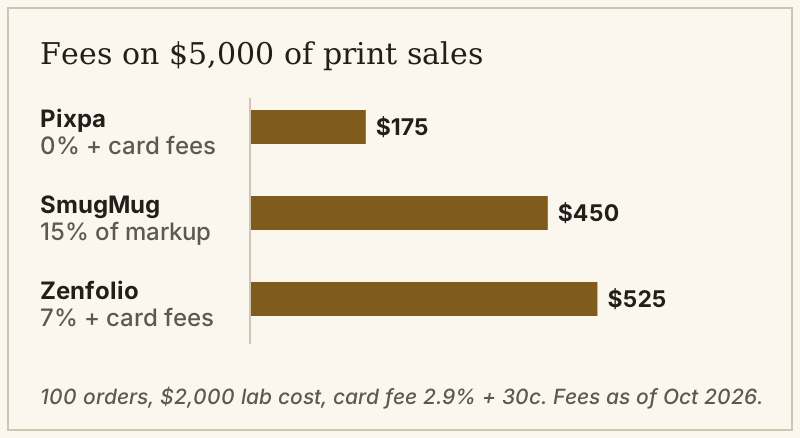
The chart takes $5,000 of print sales in 100 orders, with $2,000 of it going to the lab. On Pixpa only the card processor charges; at 2.9% plus 30 cents, the rate Zenfolio's help centre quotes for Stripe, that is $175. SmugMug's 15% of the $3,000 markup is $450, with nothing on top. Zenfolio's 7% is $350, plus the same $175 in card fees, for $525. At this volume, the difference between the cheapest and dearest fee model is larger than most of the subscriptions in the table.
That is why the cheapest plan is not always the cheapest site. A photographer selling $5,000 a year on Pixpa pays $64.80 to $144 for the plan and about $175 in card fees; the same sales on Zenfolio Professional cost $138 for the plan and $525 in fees in the first year. If you sell, put your own sales figure through the fee model before you compare subscriptions.
Four portfolios, four bills
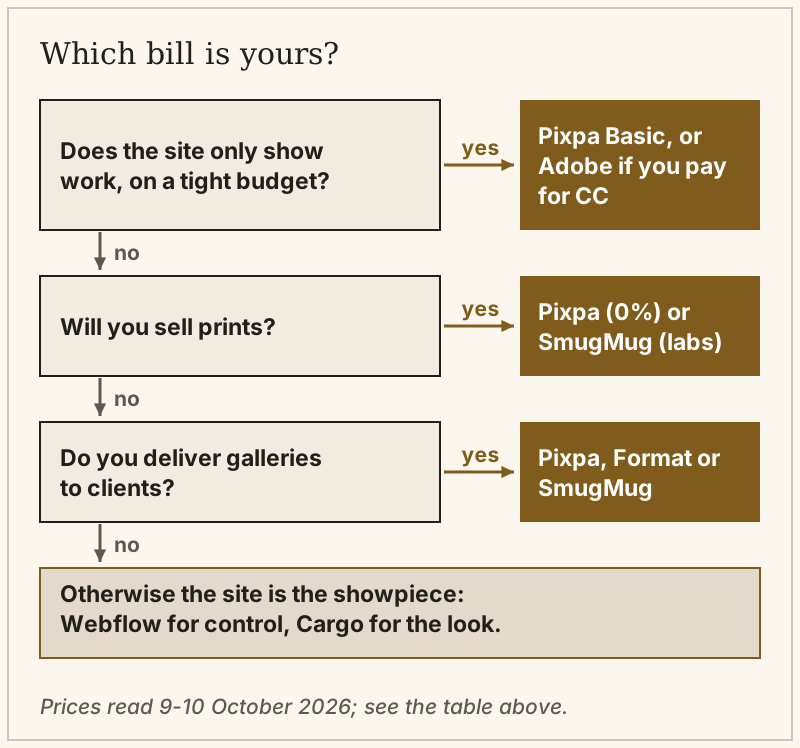
The same budget buys different things depending on what the site has to do. These four bills use the plans in the table above over three years, before domains and tax.
A graphic designer who wants the site itself to be a portfolio piece needs a content system for case studies, which on Webflow means Premium at $25 a month billed yearly: $900 over three years. A designer happy with a strong template can spend $504 over three years on Cargo, the platform with the most distinctive templates in this set.
An illustrator or artist selling prints is best served by Pixpa Creator: $108 in the first year and $144 in each of the next two, $396 in all, with no commission on sales. A photographer selling prints and delivering galleries to clients will spend $846 over three years on SmugMug Portfolio, plus 15% of whatever markup they sell. A writer showing clips needs the least of all, and our guide to website builders for writers covers the clip tools built for that job.
Free options, and what they cost you
There is no free plan on Squarespace, Pixpa or SmugMug; Squarespace and SmugMug offer 14-day trials instead. Webflow has a free Starter site plan, limited to two pages and 1 GB of bandwidth, which is enough to learn the tool and not enough for a portfolio. Behance is free and widely used for case studies, but it is a profile on Adobe's platform rather than a site at your own address.
Adobe Portfolio is the free option most people mean. Adobe's help centre lists it as included with the All Apps, Single App, Photography and Behance Pro plans, with no stand-alone subscription, so it is free only if you already pay for one of those. The cheapest US plan carrying it on 10 October 2026 was Lightroom (1TB) at $143.88 a year in monthly payments, more than four of the builders in the table, or $119.88 paid upfront. Our Adobe Portfolio review covers what that money does and does not buy.
When hiring a designer is worth it
A designer-built portfolio is a different purchase from a subscription, and we do not print an average fee for it: the ranges published online come from self-reported quotes and vary too widely to be useful. What can be said is when it is worth asking for a quote. If your work is interactive, motion-led or spatial and a template flattens it, a designer can build what a builder cannot. If your clients are art directors who read the site as evidence of taste, the site is part of the pitch.
For everyone else, the money is better spent on the work than on the frame. A template on a builder will look professional the day it launches, and the hours saved go into editing the selection, which our guide to how many projects a portfolio should show treats as the part that decides commissions. Whoever builds it, the subscription and the domain still have to be paid every year after.
Edge cases that change the bill
Tax is extra on every price above, and on some plans it is added at checkout. Monthly billing costs more almost everywhere: Squarespace Core was $39 a month against $29 billed annually, and Cargo $19 against $14. RAW storage on SmugMug is a separate add-on at $10 a month for the first terabyte. And if you need more than one site, Cargo allows unlimited sites on cargo.site addresses within one account, and Adobe Portfolio allows up to five; on the other platforms, check what a second site costs before you plan one.
For the complete ranking of these platforms rather than their prices alone, see our guide to the best portfolio website builders, and if you are leaning towards the selling end of the market, start a SmugMug trial only once you know your markup.
Catalogue notes
How much does a portfolio website cost per year?
What is the cheapest way to host a portfolio?
Do I need a custom domain for a portfolio website?
Is a portfolio website worth the cost?
Does selling prints from a portfolio site cost extra?
See where this sits on the wall: the best portfolio website builders, ranked — or browse portfolio examples.